

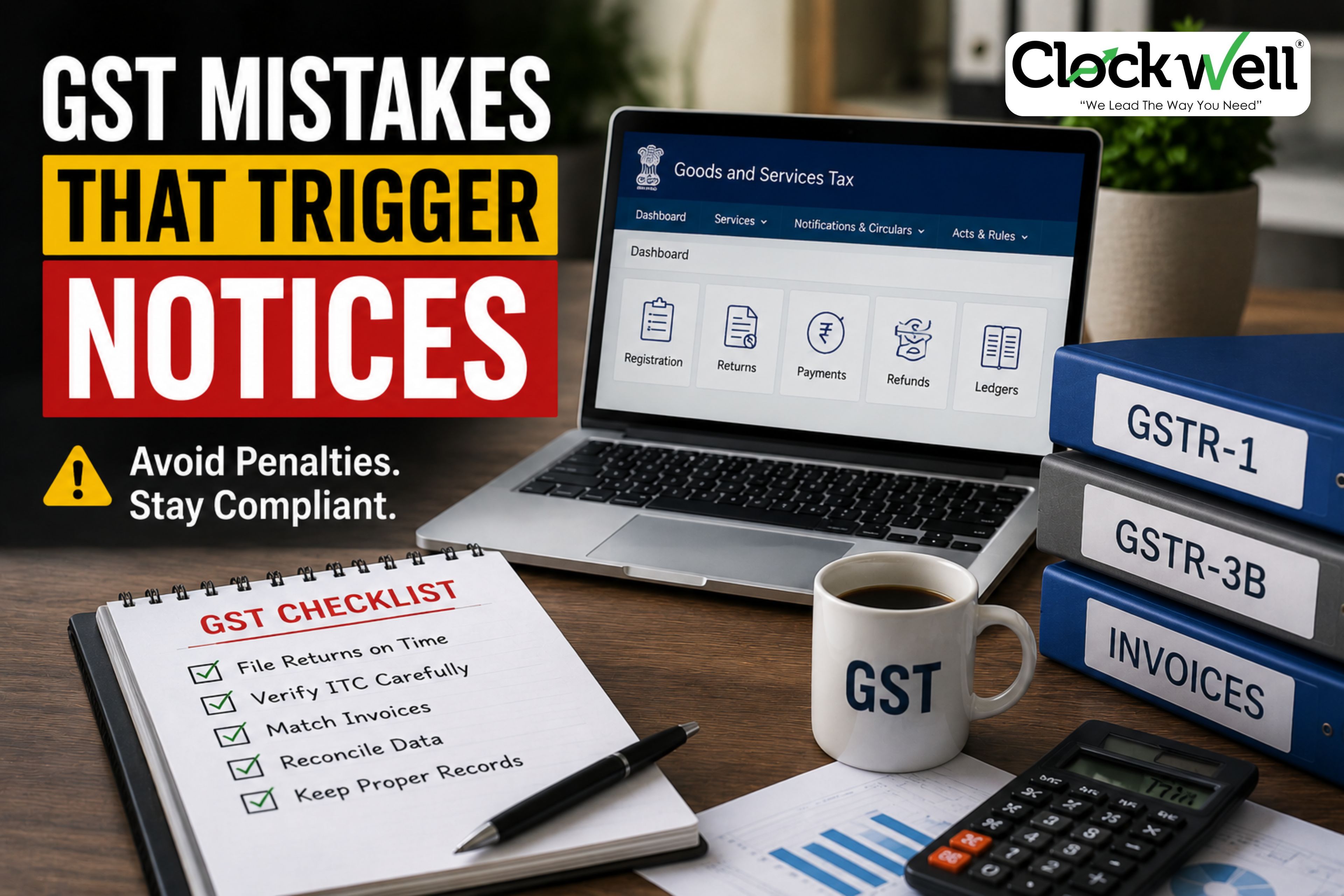
GST compliance has become one of the most important responsibilities for businesses in India. With advanced digital tracking and automated verification systems, even small mistakes in GST filing can trigger notices from the tax department.
Many businesses receive GST notices not because of fraud, but due to avoidable errors, incorrect reporting, or poor compliance management. Understanding GST mistakes that trigger notices can help businesses stay compliant and avoid unnecessary penalties and stress.
This guide explains the most common GST mistakes and how to avoid them.
Why GST Notices Are Increasing
The GST system is highly automated and connected with:
- E-invoicing systems
- GST return filings
- E-way bills
- Bank transactions
- Income tax records
Any mismatch between these records can quickly trigger notices.
Common GST Mistakes That Trigger Notices
1. Mismatch in GST Returns
One of the biggest reasons for GST notices is mismatch between:
- GSTR-1
- GSTR-3B
- E-invoice data
If sales data does not match across returns, authorities may issue notices for clarification.
How to Avoid:
- Reconcile returns before filing
- Verify invoice data regularly
2. Incorrect Input Tax Credit (ITC) Claims
Wrong ITC claims are closely monitored under GST.
Common Errors:
- Claiming ITC without valid invoice
- Claiming blocked credits
- Duplicate ITC claims
Incorrect claims can lead to penalties and reversal of credit.
3. Late GST Filing
Many businesses delay GST return filing due to poor record management.
Consequences:
- Late fees
- Interest penalties
- Increased scrutiny risk
Regular delays may attract department attention.
4. Difference Between GST and Income Tax Data
Authorities now compare GST turnover with income tax returns.
Problems Arise When:
- Sales reported under GST differ from ITR
- Business income is underreported
Mismatch increases scrutiny risk significantly.
5. Wrong HSN or SAC Codes
Using incorrect classification codes may result in:
- Wrong tax rates
- Compliance errors
- GST notices
Correct product and service classification is very important.
6. Non-Issuance of Proper Invoices
Improper invoicing is a major compliance issue.
Common Mistakes:
- Missing GSTIN
- Incorrect tax breakup
- Wrong invoice format
Invoices must follow GST rules strictly.
7. Ignoring GST Notices
Some businesses ignore notices assuming they are minor issues.
This can result in:
- Penalties
- Cancellation risks
- Legal complications
Always respond within the deadline.
8. Excessive Cash Transactions
Large cash transactions may raise compliance concerns.
Authorities may verify:
- Sales authenticity
- Tax payment accuracy
- Business reporting
Digital transactions improve transparency.
9. E-Way Bill Mismatch
Mismatch between:
- E-way bills
- GST returns
- Invoice values
can trigger automated notices.
Proper reconciliation is essential.
10. Not Maintaining Proper Records
Poor bookkeeping creates major GST compliance risks.
Important Records:
- Sales invoices
- Purchase invoices
- E-way bills
- GST returns
- Payment records
Proper documentation supports smooth compliance.
Common GST Compliance Mistakes
- Filing returns without reconciliation
- Claiming fake ITC
- Missing filing deadlines
- Incorrect invoice details
- Ignoring notices
- Poor accounting systems
These errors can become expensive over time.
How to Avoid GST Notices
File Returns on Time
Avoid late filing penalties.
Reconcile Data Regularly
Match sales, purchases, and returns carefully.
Maintain Proper Documentation
Organize invoices and records properly.
Use Correct GST Codes
Verify HSN/SAC classifications.
Take Professional Support
Expert review reduces compliance risks.
Impact of GST Notices on Businesses
GST notices can affect:
- Business reputation
- Financial stability
- Cash flow
- Compliance ratings
Repeated non-compliance may create serious legal and operational issues.
How Clockwell Can Help
Managing GST compliance can be challenging without expert support.
Clockwell provides:
- GST registration and filing
- GST reconciliation services
- Input tax credit verification
- Notice handling assistance
- Accounting and compliance support
With professional guidance, businesses can reduce compliance risks and avoid costly mistakes.
Understanding GST mistakes that trigger notices is essential for every business. Most notices are caused by avoidable filing errors, mismatches, and poor record management.
By maintaining accurate records, filing returns properly, and reconciling data regularly, businesses can stay compliant and avoid unnecessary penalties and stress.
Strong GST compliance is key to smooth business operations and long-term growth.
Published on May 16, 2026