

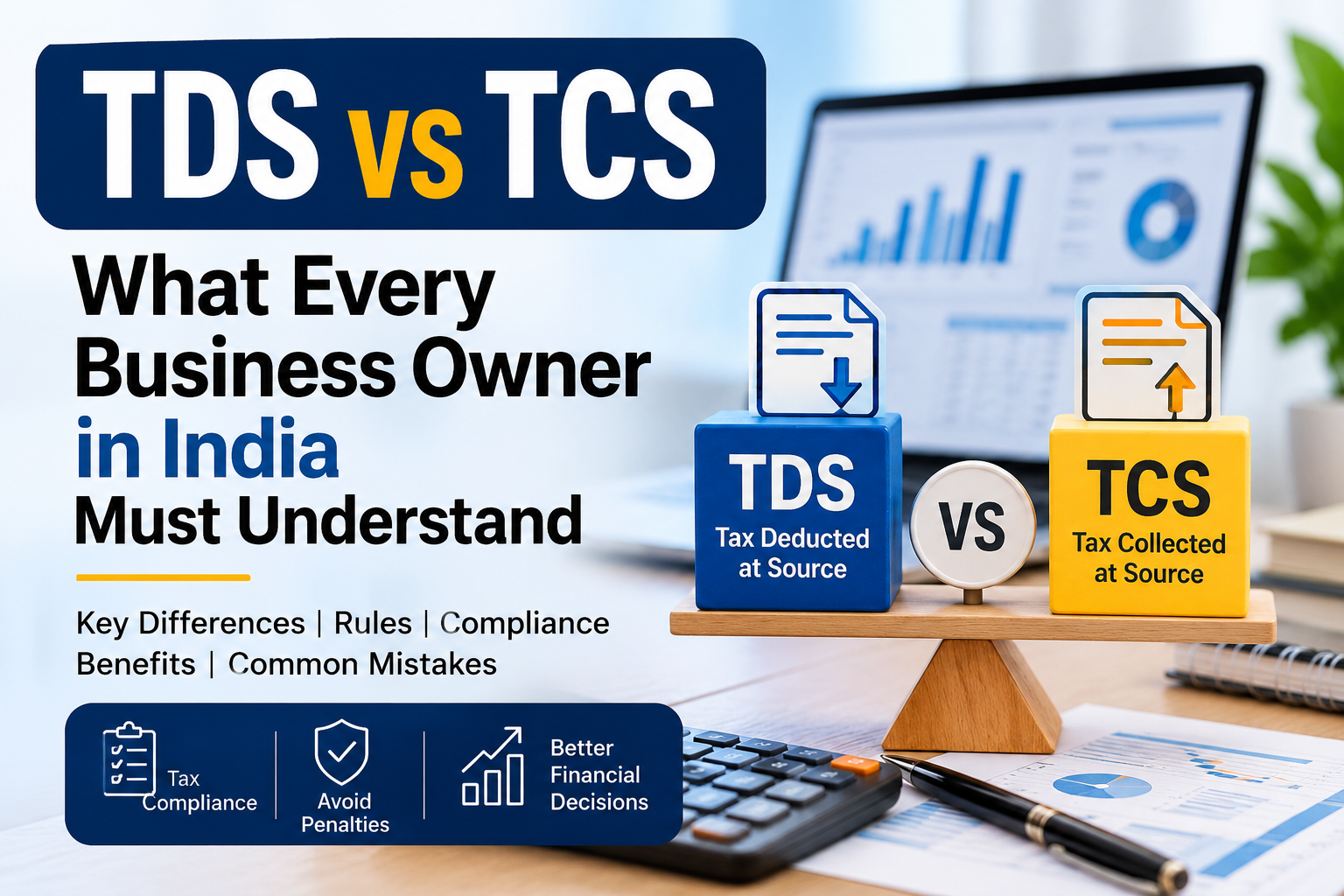
Running a business in India involves much more than generating sales and managing operations. Every business owner must also understand tax compliance to avoid penalties, maintain credibility, and ensure smooth financial operations. Among the most commonly misunderstood concepts under the Income Tax Act are Tax Deducted at Source (TDS) and Tax Collected at Source (TCS).
Many entrepreneurs assume these two terms mean the same thing because both involve collecting tax before it reaches the government. However, they serve different purposes, apply to different transactions, and impose different compliance responsibilities. A lack of understanding can result in incorrect tax deductions, delayed return filing, notices from the Income Tax Department, and unnecessary financial losses.
Whether you are a startup founder, trader, manufacturer, service provider, e-commerce seller, contractor, or established company, understanding TDS vs TCS in India is essential for maintaining proper financial records and complying with tax regulations.
This comprehensive guide explains the difference between TDS and TCS in simple language with practical business examples. By the end of this article, you'll know when TDS applies, when TCS applies, who is responsible for depositing tax, and how businesses can stay fully compliant.
What is TDS?
Tax Deducted at Source (TDS) is a mechanism introduced by the Income Tax Department to collect tax at the point where income is generated rather than waiting until the end of the financial year.
Simply put, the person making certain specified payments deducts a prescribed percentage of tax before paying the recipient and deposits that amount with the government.
Simple Example
Suppose your company hires a marketing consultant and agrees to pay ₹1,00,000 as professional fees.
Instead of paying the full amount:
- Invoice Amount: ₹1,00,000
- TDS Deducted: ₹10,000 (assuming applicable rate)
- Amount Paid: ₹90,000
The ₹10,000 deducted is deposited with the Income Tax Department on behalf of the consultant. The consultant receives credit for this tax while filing their income tax return.
Common Payments Subject to TDS
Businesses frequently deduct TDS on:
- Professional fees
- Contractor payments
- Rent
- Commission
- Brokerage
- Salary
- Interest payments
- Technical service fees
- Royalty
- Property transactions
The objective is to ensure timely tax collection while reducing tax evasion.
What is TCS?
Tax Collected at Source (TCS) works differently.
Instead of deducting tax while making a payment, the seller collects tax from the buyer during the sale of specified goods or services and deposits it with the government.
Here, the responsibility lies with the seller rather than the buyer.
Simple Example
Suppose a business sells specified goods worth ₹5,00,000 that attract TCS.
The invoice may look like this:
- Product Value: ₹5,00,000
- TCS Collected: Applicable Rate
- Total Invoice Value: Product Value + TCS
The buyer pays the total amount, including TCS, while the seller deposits the collected tax with the government.
Later, the buyer can claim credit while filing their Income Tax Return, subject to applicable rules.
TDS vs TCS in India: Key Differences
| Particular | TDS | TCS |
|---|---|---|
| Full Form | Tax Deducted at Source | Tax Collected at Source |
| Collected By | Buyer/Payer | Seller |
| Deducted/Collected From | Payee | Buyer |
| Applicable On | Payments | Sale of specified goods |
| Governed By | Income Tax Act | Income Tax Act |
| Responsibility | Person making payment | Seller receiving payment |
| Tax Credit | Available to recipient | Available to buyer |
| Compliance | Deduct, deposit and file returns | Collect, deposit and file returns |
Although both systems help the government collect taxes in advance, the transaction flow and compliance requirements are entirely different.
Why Understanding TDS vs TCS in India Is Important
Understanding TDS vs TCS in India is not just about tax knowledge—it directly impacts your business's financial health and compliance.
1. Avoid Heavy Penalties
Incorrect deduction or collection can attract interest, penalties, and notices from the Income Tax Department.
2. Maintain Legal Compliance
Businesses that comply with TDS and TCS regulations build trust with clients, vendors, banks, investors, and government authorities.
3. Improve Cash Flow Planning
Knowing when taxes are deducted or collected helps businesses estimate cash flow more accurately and avoid unexpected financial pressure.
4. Reduce Tax Disputes
Proper compliance minimizes mismatches in tax records, reducing the chances of litigation or scrutiny.
5. Enhance Financial Transparency
Timely deduction, collection, and return filing demonstrate strong financial discipline, which is beneficial during audits, funding rounds, and business expansions.
6. Claim Tax Credit Correctly
Both deductees and buyers receive tax credit for TDS or TCS reflected in their tax records. Proper compliance ensures these credits are available without delay.
Who Needs to Understand TDS vs TCS in India?
Almost every business dealing with financial transactions should understand these provisions.
Startups
Growing startups often hire consultants, freelancers, and contractors. These payments may attract TDS.
Private Limited Companies
Companies regularly deduct TDS on salaries, rent, professional fees, and contractor payments while also complying with TCS where applicable.
LLPs and Partnership Firms
Businesses operating as LLPs or partnerships frequently deal with vendors and service providers, making TDS compliance an important responsibility.
Proprietorship Businesses
Even sole proprietors crossing prescribed turnover limits may be required to deduct TDS under specific sections of the Income Tax Act.
E-commerce Businesses
Online sellers and marketplace operators should understand both TDS and TCS provisions, especially considering the compliance requirements applicable to digital commerce.
Manufacturers
Manufacturing businesses deal with contractors, transporters, suppliers, and machinery vendors, making TDS compliance a routine requirement.
Traders and Wholesalers
Certain transactions involving specified goods may attract TCS provisions, making it essential for traders to understand applicable rules.
Real Estate Businesses
Property purchases, contractor payments, and professional services often involve TDS obligations.
Freelancers and Professionals
Although they may not always deduct TDS, freelancers should understand why clients deduct tax from their payments and how to claim the corresponding credit.
When Should Businesses Consider TDS and TCS Compliance?
Businesses should not wait until receiving a tax notice to understand these provisions. Compliance begins as soon as eligible transactions occur.
You should review your TDS obligations when:
- Paying salaries to employees.
- Hiring professionals or consultants.
- Paying contractors.
- Paying office rent.
- Paying commission or brokerage.
- Making interest payments.
- Purchasing immovable property where TDS provisions apply.
You should review your TCS obligations when:
- Selling goods covered under TCS provisions.
- Conducting transactions where TCS is mandated under the Income Tax Act.
- Entering into high-value sales that fall within notified categories.
- Expanding into sectors where seller-based tax collection is applicable.
Regularly reviewing your business transactions with a qualified tax professional can help identify TDS and TCS obligations before they become compliance issues.
What's Coming Next
In Part 2, we'll explore:
- Key Features of TDS and TCS
- Step-by-Step Compliance Process
- Documents Required
- 10+ Benefits of Proper Compliance
- Common Mistakes Businesses Make
- Challenges and Practical Solutions
- Cost of TDS/TCS Compliance
- Latest Tax Rules and Updates for 2026
Key Features of TDS and TCS in India
Understanding the features of TDS vs TCS in India helps businesses implement the correct compliance process and avoid costly errors. Although both are advance tax collection mechanisms under the Income Tax Act, their operational framework differs significantly.
1. Advance Tax Collection Mechanism
Both TDS and TCS enable the government to collect tax throughout the financial year instead of waiting until taxpayers file their annual income tax returns. This ensures a steady flow of revenue and improves tax compliance.
2. Mandatory Compliance
Where applicable, TDS and TCS are not optional. If your business falls under the prescribed provisions of the Income Tax Act, you are legally required to deduct or collect tax and deposit it within the stipulated time.
3. Tax Credit to the Taxpayer
The amount deducted as TDS or collected as TCS is not an additional tax burden. Instead, it appears in the taxpayer's tax records and can be claimed as credit while filing the Income Tax Return (ITR).
4. Applicable on Specified Transactions
Not every payment or sale attracts TDS or TCS. The Income Tax Act specifies the types of transactions, threshold limits, and applicable rates.
Examples include:
- Salary payments
- Professional fees
- Contractor payments
- Rent
- Commission
- Interest payments
- Purchase of immovable property
- Sale of notified goods
- Certain high-value transactions
5. Online Compliance System
The entire TDS and TCS ecosystem has become largely digital. Businesses can:
- Deposit tax online
- File quarterly returns
- Download certificates
- Verify tax credits
- Track compliance through the Income Tax portal
This has significantly simplified tax administration for businesses.
6. Periodic Return Filing
Businesses are required to file TDS and TCS returns periodically. These returns provide details such as:
- PAN of the deductee or buyer
- Amount paid or received
- Tax deducted or collected
- Date of deduction or collection
- Tax deposited with the government
Accurate reporting ensures that the recipient receives the correct tax credit.
7. Interest and Penalties for Non-Compliance
Failure to deduct, collect, deposit, or file returns within the prescribed time can result in:
- Interest on delayed payment
- Late filing fees
- Monetary penalties
- Disallowance of certain business expenses
- Notices from the Income Tax Department
Timely compliance is therefore essential for every business.
Step-by-Step Process for TDS and TCS Compliance
Proper compliance requires more than simply deducting or collecting tax. Businesses should establish a structured process to ensure every transaction is handled correctly.
Step 1: Identify Whether TDS or TCS Applies
Before processing any payment or sale, determine whether the transaction falls under the applicable provisions of the Income Tax Act.
Ask questions such as:
- Is this payment covered under TDS?
- Is this sale subject to TCS?
- Has the applicable threshold been crossed?
- Which section of the Income Tax Act governs this transaction?
Maintaining a compliance checklist helps reduce errors.
Step 2: Determine the Correct Rate
Different transactions attract different TDS or TCS rates.
Factors influencing the rate include:
- Nature of payment
- Category of goods
- PAN availability
- Residential status
- Applicable exemptions
- Current government notifications
Always verify the latest applicable rates before processing transactions.
Step 3: Deduct or Collect Tax
Once applicability and rates are confirmed:
For TDS
Deduct the prescribed amount before releasing payment to the recipient.
For TCS
Collect the prescribed amount from the buyer while raising the invoice.
Maintain supporting documentation for every transaction to facilitate audits and return filing.
Step 4: Deposit the Tax
The deducted or collected amount must be deposited with the government within the prescribed due date.
Ensure that:
- Correct challan details are used.
- PAN information is accurate.
- Payment records are preserved.
- Bank acknowledgements are retained.
Delayed deposits may attract interest and penalties.
Step 5: File Returns and Issue Certificates
After depositing the tax:
- File the applicable quarterly return.
- Verify that all transaction details are correct.
- Issue TDS certificates where applicable.
- Reconcile records before final submission.
Proper filing ensures that taxpayers receive their tax credit without discrepancies.
Documents Required for TDS and TCS Compliance
Maintaining proper documentation is essential for accurate reporting, audits, and future reference.
1. PAN Card
The Permanent Account Number (PAN) is one of the most important documents in TDS and TCS compliance. Incorrect PAN details may lead to higher deduction rates and reporting errors.
2. TAN Registration
Businesses responsible for deducting or collecting tax generally require a Tax Deduction and Collection Account Number (TAN). It is mandatory for filing TDS and TCS returns in most applicable cases.
3. GST Registration Details
Although TDS/TCS and GST are separate laws, GST details are often required for accounting, invoicing, and reconciliation.
4. Purchase or Sale Invoices
Invoices establish the nature of the transaction and help determine whether TDS or TCS provisions apply.
5. Vendor or Customer Agreements
Contracts and agreements clarify:
- Nature of services
- Payment terms
- Tax responsibilities
- Scope of work
These documents are often reviewed during audits.
6. Bank Statements
Bank records verify:
- Date of payment
- Amount transferred
- Tax deducted or collected
- Challan payments
They also assist in reconciliation.
7. Payment Vouchers
Internal vouchers provide supporting evidence for accounting entries and help maintain proper financial records.
8. Challan Receipts
After depositing TDS or TCS, retain the challan acknowledgement as proof of payment.
9. Quarterly Return Details
Copies of filed returns should be preserved for future assessments, audits, and departmental queries.
10. Accounting Records
Maintain complete books of accounts, including:
- Ledgers
- Journal entries
- Vendor registers
- Customer registers
- Payment records
These documents support accurate compliance and financial reporting.
Benefits of Understanding TDS vs TCS in India
Proper understanding of TDS vs TCS in India provides significant advantages beyond legal compliance.
1. Better Tax Compliance
Businesses remain aligned with Income Tax regulations and avoid unnecessary legal complications.
2. Reduced Risk of Penalties
Timely deduction, collection, and filing help avoid interest charges and monetary penalties.
3. Improved Financial Planning
Knowing tax obligations in advance enables businesses to manage cash flow more effectively.
4. Accurate Accounting
Correct tax treatment leads to cleaner books of accounts and easier financial reporting.
5. Faster Tax Credit
Customers, vendors, and employees receive timely tax credits, improving business relationships.
6. Increased Business Credibility
Compliant businesses are viewed more favorably by investors, banks, auditors, and government authorities.
7. Easier Audit Process
Proper documentation and timely filings simplify statutory, tax, and internal audits.
8. Better Vendor Relationships
Correct TDS deductions reduce disputes and build trust with suppliers and service providers.
9. Improved Decision-Making
Business owners can evaluate contracts and transactions more accurately when tax implications are clearly understood.
10. Long-Term Business Stability
Consistent compliance reduces operational risks and supports sustainable business growth.
Common Mistakes Businesses Should Avoid
Many businesses receive tax notices not because of intentional evasion but due to avoidable compliance mistakes.
Deducting TDS at the Wrong Rate
Using incorrect rates can result in short deduction or excess deduction, leading to reconciliation issues.
Solution: Verify applicable provisions before processing payments.
Missing Due Dates
Late deposits and delayed return filing often attract interest and late fees.
Solution: Maintain a compliance calendar with automated reminders.
Incorrect PAN Details
Even a minor error in PAN information can cause tax credit mismatches.
Solution: Validate PAN details before filing returns.
Ignoring Threshold Limits
Some businesses deduct or collect tax even when thresholds have not been crossed, while others fail to deduct after crossing the limit.
Solution: Review transaction values regularly throughout the financial year.
Poor Documentation
Missing invoices, agreements, or challans make it difficult to respond to departmental notices.
Solution: Maintain organized digital and physical records.
Failure to Reconcile Records
Differences between accounting records and filed returns may trigger notices.
Solution: Perform monthly reconciliation of ledgers, challans, and returns.
Common Challenges and Practical Solutions
Challenge: Frequent Changes in Tax Laws
Income tax provisions are updated regularly, making compliance challenging for small businesses.
Solution: Stay informed through official notifications and consult qualified tax professionals.
Challenge: Complex Business Transactions
Modern businesses often deal with multiple vendors, online marketplaces, and interstate transactions.
Solution: Implement robust accounting software and establish internal review procedures.
Challenge: Limited In-House Expertise
Many startups and small businesses lack dedicated tax professionals.
Solution: Outsource compliance to experienced accounting and taxation consultants.
Challenge: High Volume of Transactions
Businesses processing hundreds of payments each month may find manual compliance difficult.
Solution: Automate accounting workflows and integrate TDS/TCS calculations into financial systems.
Challenge: Responding to Tax Notices
Errors in reporting or reconciliation can result in notices from the Income Tax Department.
Solution: Keep complete documentation, reconcile data regularly, and respond promptly with professional assistance.
Cost of TDS and TCS Compliance
The cost of complying with TDS and TCS requirements varies depending on the size and complexity of the business.
Factors Affecting Compliance Costs
- Number of monthly transactions
- Number of employees
- Vendor and customer volume
- Accounting software used
- Professional consultancy fees
- Frequency of return filing
- Complexity of business operations
Typical Cost Components
- TAN registration (if applicable)
- Accounting software subscription
- Professional tax consultant fees
- Return filing charges
- Compliance audits
- Staff training and documentation
Although compliance involves some expenditure, it is usually far less expensive than paying interest, penalties, or facing prolonged tax disputes.
Latest Updates and Trends (2026)
Tax laws continue to evolve with the government's focus on digital compliance and improved transparency. Businesses should regularly monitor official notifications for changes in rates, thresholds, return formats, and reporting requirements.
Key trends include:
- Increased use of digital reporting and online verification.
- Greater integration between tax systems for easier reconciliation.
- Enhanced data analytics by tax authorities to identify mismatches.
- Stronger emphasis on timely filing and accurate documentation.
- Growing adoption of automation and AI-powered accounting tools to reduce compliance errors.
Given the dynamic nature of tax regulations, businesses should periodically review their compliance processes and seek professional advice whenever significant legislative changes are introduced.
Coming Up in Part 3
The final section will include:
- 10 detailed FAQs on TDS and TCS
- Expert compliance tips
- Key takeaways
- A compelling conclusion
- A strong call-to-action encouraging readers to contact Clockwell for professional taxation and compliance assistance.
Frequently Asked Questions (FAQs)
1. What is the main difference between TDS and TCS?
The primary difference is who is responsible for collecting the tax.
- TDS (Tax Deducted at Source): The payer deducts tax before making payment to the recipient.
- TCS (Tax Collected at Source): The seller collects tax from the buyer at the time of sale and deposits it with the government.
In simple terms, TDS applies when making certain payments, while TCS applies when selling specified goods or carrying out notified transactions.
2. Is TDS applicable to every business payment?
No. TDS is applicable only to specific payments notified under the Income Tax Act and only when the prescribed threshold limits are crossed.
Examples include:
- Salaries
- Professional fees
- Contractor payments
- Rent
- Interest
- Commission
- Brokerage
- Certain property transactions
Business owners should verify whether a payment falls under the applicable provisions before deducting tax.
3. Who is responsible for depositing TDS and TCS?
For TDS, the person making the payment is responsible for deducting and depositing the tax.
For TCS, the seller collecting the tax from the buyer is responsible for depositing it with the government.
Failure to deposit the collected or deducted amount within the due date may attract interest and penalties.
4. Can taxpayers claim credit for TDS and TCS?
Yes.
The amount deducted as TDS or collected as TCS is reflected in the taxpayer's records and can generally be claimed while filing the Income Tax Return, subject to applicable provisions and reconciliation.
It is important to ensure that all details are correctly reported to avoid mismatches.
5. What happens if TDS or TCS is not deducted or collected?
Non-compliance can lead to several consequences, including:
- Interest on delayed payment
- Late filing fees
- Financial penalties
- Income Tax notices
- Disallowance of certain business expenses in specific cases
- Additional compliance scrutiny
Timely compliance helps businesses avoid unnecessary litigation and financial loss.
6. Are startups also required to comply with TDS and TCS?
Yes, if they meet the applicable conditions under the Income Tax Act.
Many startups engage consultants, freelancers, software vendors, contractors, and service providers. Depending on the transaction and statutory requirements, TDS provisions may apply.
Businesses dealing in specified goods may also have TCS obligations.
7. How often are TDS and TCS returns filed?
TDS and TCS returns are generally filed on a quarterly basis, subject to the applicable rules and forms.
Businesses should maintain accurate transaction records throughout the year to ensure smooth return filing.
8. Is GST the same as TDS or TCS?
No.
They are entirely different tax mechanisms.
- GST is an indirect tax on the supply of goods and services.
- TDS is the deduction of income tax at the source of payment.
- TCS is the collection of income tax at the source of specified sales.
Understanding the distinction helps businesses maintain accurate accounting and statutory compliance.
9. What records should businesses maintain for TDS and TCS compliance?
Businesses should retain:
- PAN details
- TAN details
- Vendor and customer information
- Invoices
- Agreements
- Bank statements
- Challan receipts
- Accounting ledgers
- Quarterly return acknowledgements
- Tax certificates
Maintaining organized records simplifies audits and future assessments.
10. Should businesses hire a professional consultant for TDS and TCS compliance?
For many businesses, especially growing startups, SMEs, and companies handling multiple transactions, professional guidance can significantly reduce compliance risks.
A qualified consultant can assist with:
- Applicability analysis
- Correct deduction and collection
- Return filing
- Tax reconciliation
- Departmental notices
- Annual compliance planning
Professional support allows business owners to focus on growth while ensuring statutory obligations are fulfilled.
Expert Tips for Business Owners
Understanding TDS vs TCS in India is only the first step. Consistent compliance requires planning, documentation, and periodic reviews. The following best practices can help businesses reduce risk and improve efficiency.
1. Create a Compliance Calendar
Track important due dates for tax deductions, deposits, return filing, and certificate issuance.
2. Verify PAN Before Processing Transactions
Incorrect PAN details can lead to higher deduction rates and tax credit mismatches.
3. Reconcile Accounts Every Month
Monthly reconciliation between books of accounts, challans, bank statements, and returns helps identify discrepancies before quarterly filings.
4. Use Reliable Accounting Software
Modern accounting software can automate calculations, maintain records, generate reports, and reduce manual errors.
5. Stay Updated with Tax Law Changes
Tax regulations evolve regularly. Monitor official notifications and consult professionals whenever new amendments are introduced.
6. Train Your Finance Team
Ensure employees handling accounts payable, procurement, payroll, and finance understand TDS and TCS requirements.
7. Maintain Complete Documentation
Proper documentation is the foundation of successful compliance and simplifies responses to departmental notices.
8. Review Vendor and Customer Master Data
Regularly verify PAN, GST registration details, addresses, and banking information to avoid reporting errors.
9. Perform Internal Compliance Audits
Periodic internal reviews help identify gaps before they become legal or financial issues.
10. Seek Professional Advice for Complex Transactions
Business restructuring, mergers, acquisitions, international transactions, and high-value contracts often involve complex tax implications. Expert guidance can prevent costly mistakes.
Understanding TDS vs TCS in India is no longer optional for modern businesses. Whether you are a startup, a growing enterprise, a professional firm, or an established company, knowing when to deduct tax, when to collect tax, and how to comply with statutory requirements is essential for smooth business operations.
Although TDS and TCS may appear similar, they apply to different transactions and place different responsibilities on businesses. Proper understanding of these provisions helps prevent penalties, improves financial transparency, strengthens vendor relationships, and ensures that eligible taxpayers receive the correct tax credits.
As tax regulations continue to evolve, businesses should adopt a proactive approach by maintaining accurate records, reviewing transactions regularly, and staying updated with the latest compliance requirements. Investing time in understanding these rules today can save significant costs and administrative challenges in the future.
Need Expert Assistance with TDS and TCS Compliance?
Managing tax compliance while running a business can be challenging. From identifying applicable provisions to filing returns accurately and responding to tax notices, professional support can make the process much easier.
Clockwell International LLP offers end-to-end taxation and compliance solutions for startups, SMEs, LLPs, private limited companies, and established businesses across India.
Our experienced professionals can help you with:
- TDS and TCS compliance
- Income Tax advisory
- GST registration and filing
- Company and LLP registration
- Accounting and bookkeeping
- ROC and MCA compliance
- Tax planning and business advisory
- Audit support
- Ongoing compliance management
Get in touch with Clockwell today to ensure your business remains compliant, avoids unnecessary penalties, and builds a strong financial foundation for long-term growth. Let our experts handle the complexities of tax compliance while you focus on growing your business with confidence.
Published on June 27, 2026